What Is Hot Desking? How Flexi Desks Work in Dubai
Published Date:
Last Updated:

Key Takeaways
Unassigned seating suits mobile professionals, visiting teams, and founders who need flexible access without a permanent lease.
Day passes fit occasional visits, whereas recurring memberships lower per-day costs for regular users and include extras such as lounge entry or meeting room credits.
Standard coworking passes do not supply a commercial lease, an Ejari-registered tenancy, or a trade licence, so confirm setup rules with your licensing authority.
Private meeting rooms or enclosed offices remain necessary when handling confidential client discussions, financial reviews, or close team coordination.
Flexible working has transformed how modern professionals and businesses approach office space. Across Dubai, independent consultants, remote teams, founders, and global companies frequently seek a polished, reliable environment without committing to a long-term lease. While a hot desk provides a practical solution for this level of adaptability, it is often confused with the flexi desk packages tied to UAE free-zone company formation.
This guide explores how hot desking operates, clarifies the difference between coworking memberships and free-zone licensing packages, and outlines what to look for when choosing a workspace that fits your business.
What Is Hot Desking?
Hot desking is a seating model where multiple professionals share the same workstation at different times rather than holding a permanently assigned spot. Depending on the provider, open places are allocated either on a first-come, first-served basis or through an advance booking system.
Commonly found in coworking spaces, serviced offices, and shared business centres, this setup lets you step into a fully equipped environment whenever your schedule demands, without maintaining a permanently assigned workstation.
A hot desk differs from a dedicated desk, which is reserved exclusively for one person. While both options sit within shared office settings, the former prioritises agility, whereas the latter offers a permanent personal station.
Hot Desk vs Free-Zone Flexi Desk: What's the Difference?
Although the terms are sometimes used interchangeably, a coworking hot desk and a free-zone flexi desk serve distinct purposes.
Feature | Coworking Hot Desk | Free-Zone Flexi Desk |
Primary purpose | Grants access to a shared workstation for daily tasks. | Fulfils facility conditions tied to company registration. |
Typical users | Freelancers, remote professionals, consultants, and corporate employees. | Entities incorporating or operating under a free-zone authority. |
Access model | Available via a day pass or recurring membership. | Governed by the chosen corporate formation package. |
Business licensing | Does not include a commercial licence. | Often satisfies mandatory premises criteria for a trade licence. |
Visa eligibility | Carries no sponsorship or residency rights. | May include a residency quota, depending on the jurisdiction and tier. |
Governing terms | Defined by the coworking operator's house rules and membership agreement. | Regulated by the respective free-zone authority's compliance framework. |
For example, DMCC's published guidance allows up to three visas under a flexi-desk arrangement. However, residency quotas and eligibility depend strictly on each authority's regulations and the selected corporate tier, so this allowance should not be generalised across all Dubai free zones.

How Does Hot Desking Work in Dubai?
Securing a shared workstation typically begins with selecting a membership tier or single-day pass that fits your schedule. Depending on the operator, professionals reserve a spot in advance via an app, register at reception upon arrival, or choose from open seating in the lounge.
Operating terms vary across Dubai brands and even between buildings managed by the same company. Some plans restrict entry to a single location during standard business hours, while others grant multi-centre movement or extended evening and weekend access. Daily capacity limits and peak-hour reservation policies can also shape seating options.
Day Passes vs Monthly Hot Desk Memberships
Coworking operators in Dubai typically structure shared seating around two primary formats, depending on how often you plan to visit.
Feature | Day Pass | Monthly Hot Desk Membership |
Duration | Valid for a single business day. | Grants recurring entry across monthly, 6-month, or 12-month terms. |
Best suited for | Occasional visits, business trips, and one-off project days. | Professionals who rely on an office setting several times a week. |
Commitment | Pay-as-you-go with zero ongoing obligation. | Runs on rolling 30-day cycles or multi-month contracts, depending on the tier. |
Location scope | Usually confined to the specific building where the pass is issued. | Often unlocks multi-centre movement across a provider's local network. |
Seating policy | Subject to daily capacity and walk-in rules. | Governed by member reservation policies and peak-hour availability. |
Added amenities | Limited to core lounge features included in the daily rate. | Frequently bundles meeting room credits, printing allowances, or preferential member pricing. |
Before selecting a plan, check operating hours, advance reservation rules, location limits, and extra fees. The lowest upfront rate is rarely the best value if you intend to use the space regularly.
What Facilities Are Available at a Hot Desk?
The amenities included in a membership directly shape how practical a shared workspace is for daily operations. Common features to look for include:
Internet connectivity: Reliable, business-grade Wi-Fi capable of supporting video calls, cloud platforms, and continuous online tasks.
Power outlets: Conveniently placed charging points for laptops and mobile devices.
Meeting rooms: Bookable spaces for presentations, team discussions, and client appointments.
Phone booths: Acoustic pods that offer privacy for confidential calls away from open seating areas.
Printing stations: On-site access to printers, scanners, and essential office equipment.
Shared lounges and pantries: Communal zones designed for breaks, informal catch-ups, and refreshments.
Reception and administrative support: Front-desk assistance with greeting visitors and handling day-to-day operational needs.
Storage: Day lockers or short-term cubbies for keeping personal belongings secure while you are on-site.
Exact inclusions, booking rules, and any pay-as-you-go charges for extras such as meeting rooms or printing vary across providers and membership tiers.

What Are the Benefits of Hot Desking?
The appeal of shared seating comes down to how well it matches your routine and budget without locking you into long-term overhead.
Adaptability for Hybrid Schedules
Hot desking supports professionals who split their week between home, client sites, and the office. Instead of paying for an assigned workstation that sits empty on travel days, you claim a seat only when your calendar calls for it. This structure suits remote employees, field consultants, and executives who move regularly across the city.
Access to a Professional Business Environment
Residential spaces and public cafés rarely offer the infrastructure required for uninterrupted productivity. A dedicated coworking environment brings enterprise-grade connectivity, essential equipment, and hospitable lounge areas together under one roof, giving you a reliable base for focused tasks between client meetings.
Networking and Community Connection
Open coworking lounges gather people from diverse industries and roles under one roof. Casual conversations at the coffee bar or shared tables often spark fresh perspectives and worthwhile contacts, even when formal partnerships are not the goal. Sitting alongside other driven individuals brings an energy you rarely get working solo.
Flexible Terms as Teams Evolve
On-demand seating suits organisations that do not need a permanent footprint for every staff member yet. As headcount, schedules, or privacy needs shift, companies can step up into dedicated desks or private suites without relocating to a completely new property.
Who Benefits Most from Hot Desking?
Shared seating fits professionals whose calendars do not call for a fixed desk every day of the week.
Freelancers, Consultants and Entrepreneurs
Independent specialists often turn to open office lounges when they need dependable connectivity, essential equipment, or a clear boundary away from home. It also gives them a composed setting to finish deliverables and prepare for meetings. For early-stage founders launching a venture, it avoids locking capital into a private suite before the business model is proven.
International Businesses and Hybrid Teams
Organisations active across multiple markets frequently need a foothold in Dubai without committing to a full-scale office for every staff member. On-demand desks support visiting executives, regional account leads, and employees splitting time on hybrid rosters.
For instance, an overseas advisory firm with a compact group travelling to Dubai periodically often finds shared seating more practical than signing a larger lease from day one. Once local headcount grows or face-to-face client demands pick up, leadership can weigh whether dedicated desks or a private office make better sense.

What Are the Limitations of Hot Desking?
Shared seating is not ideal for every role or business model. Keep these practical trade-offs in mind:
Shifting seat availability: Open spots can fill up at peak hours, and you will rarely claim the same station twice.
Minimal personal storage: Without a fixed desk, leaving documents or equipment overnight is typically restricted.
Coordination friction: Teams that rely on side-by-side collaboration may struggle when members sit apart.
Confidentiality and Client Meetings
Open floor plans are rarely built for sensitive financial reviews, legal talks, negotiations, or private client calls. Ambient noise and nearby members can easily compromise both visual and acoustic discretion. When discussions demand full confidentiality, book a private meeting room or enclosed office instead.
Business Licensing and Ejari Considerations
Companies must separate day-to-day seating access from the legal premises needed to register or renew a trade licence:
Standard hot desk memberships: Do not supply a commercial lease, an approved registered address, or a trade licence.
Free-zone flexi-desk packages: May satisfy certain premises conditions tied to company formation, depending on the authority, business activity, and selected tier.
Ejari registration: Serves as Dubai's platform for registering eligible tenancy contracts, yet a standard coworking pass should never be assumed to carry an Ejari-registered lease.
Always verify exact compliance rules directly with the relevant licensing authority and facility operator before tying any workspace plan to company setup or official filings.
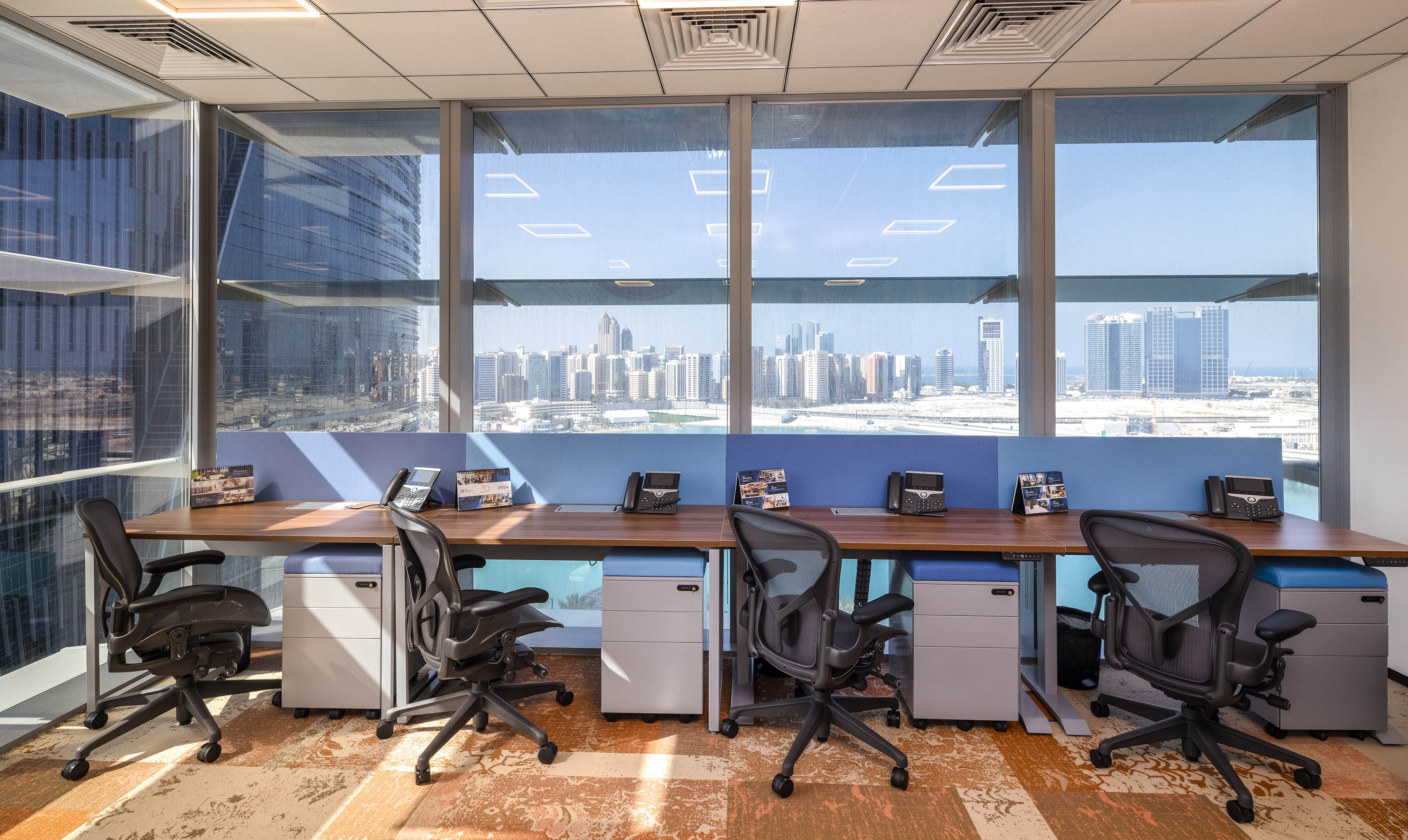
Hot Desk vs Dedicated Desk vs Private Office: What's the Difference?
These seating models differ in how desks are allocated, the level of privacy offered, and the consistency of the surrounding setting.
Feature | Hot Desk | Dedicated Desk | |
Seating allocation | Shared and unassigned | Reserved for one individual | Enclosed room for a team or executive |
Privacy | Open lounge or shared floor | Open shared area | Higher visual and acoustic privacy |
Desk setup | Changes from visit to visit | Consistent personal layout | Full control over interior layout |
Storage | Varies by operator | Varies by operator | Varies by lease or package |
Best fit | Occasional or agile schedules | Regular solo attendance | Teams and client-facing operations |
In short, hot desks suit occasional or shifting schedules, dedicated desks fit individuals who want a steady spot without paying for a full room, and private offices serve teams that need discretion, group collaboration, or client-facing space. The right choice depends on how often you visit and what your daily tasks require.
What Should You Look for When Choosing a Hot Desk in Dubai?
Comparing headline rates alone misses practical details that shape daily productivity. Check these core factors before signing up:
Commute and district fit: Pick a centre near your home, client stops, or Metro and highway links. Distinct hubs serve different schedules across the city, from Sweid One in Jumeirah Lakes Towers to One Central and One Za'abeel near the Dubai World Trade Centre.
Connectivity and technical support: Confirm fast, dependable Wi-Fi, easy power access, and on-site IT help for calls and cloud tools.
Privacy and meeting spaces: Look for acoustic phone booths, bookable meeting rooms, and quiet zones when handling sensitive discussions or client calls.
Everyday equipment and lounges: Check for printing stations, welcoming reception teams, and comfortable refreshment areas for breaks between tasks while weighing daily coworking space factors that shape how smoothly a floor runs.
Storage options: Clarify whether day lockers or short-term cubbies are available if you carry laptops, files, or personal items.
Operating hours and entry rules: Verify weekday, evening, or weekend hours, advance booking rules, and whether your pass covers one building or multiple sites.
Contract terms and extra fees: Review minimum terms alongside separate charges for meeting rooms, printing, guest passes, or extended entry so you know the true monthly cost.

Coworking and Meeting Room Options in Dubai
Shared seating covers everyday individual tasks, while bookable rooms handle client presentations, interviews, and confidential discussions. Exploring coworking spaces helps clarify how day passes and recurring memberships compare across districts, whereas booking meeting rooms on demand gives teams a private setting when discretion matters. Check individual centre terms, booking rules, and room rates before locking in a plan.
Finding a Workspace That Fits Your Requirements
Hot desking works best when treated as a practical starting point rather than a static rule. As client demands shift, teams expand, or licensing rules come into play, the right office model is one you can adjust without friction. Weighing day-to-day habits alongside longer-term operational goals helps ensure your base in Dubai stays fit for purpose at every stage.

Ketan specialises in flexible office solutions across the UAE and Saudi Arabia. With a background as VP at Barclays leading strategic transformation and flex office initiatives, he brings deep knowledge in corporate real estate and business growth across the region.
Table of Contents
DWTC LEASE CALCULATOR
AVG. Saving
Starts from

Frequently Asked Questions
How much does a hot desk cost per month in Dubai?
A hot desk membership in Dubai can cost AED 1,250 per month. The price may vary depending on the workspace location, membership duration, access hours and included facilities.
Is a monthly membership more cost-effective than purchasing day passes?
Yes. At The Executive Centre (TEC), a Day Pass costs AED 250, while a monthly Hot Desk membership costs AED 1,250. This means five day passes equal the cost of one monthly membership, making the latter more economical for professionals who use a coworking space regularly.
Can a small team reserve multiple workstations in the same coworking space?
Yes. Small teams can usually book multiple hot desks in the same coworking space, subject to availability and booking policies. However, seating together is not always guaranteed because hot desks are unassigned. Teams requiring consistent seating or greater privacy may find dedicated desks or a private office more suitable.
Can you freeze a membership while travelling outside the UAE?
It depends on the coworking provider's membership terms. Some plans may not allow temporary pauses or refunds for unused periods. Check whether your membership permits a hold or requires advance notice. If your workspace arrangement is linked to a business licence or visa allocation, confirm any implications with the relevant free-zone authority before making changes. For specific questions about hot desk membership terms, available options or temporary membership arrangements, please contact us.
Do UAE banks accept a hot desk invoice for account opening?
A hot desk invoice alone may not be sufficient proof of business premises when opening a corporate bank account in the UAE. Banks have different KYC requirements and may request a trade licence, facility agreement, registered tenancy documents where applicable, and evidence of business activity. Requirements vary by bank and business activity, so confirm the accepted documents with your chosen bank before applying.